


THE CLIMATE SCORECARD MAGAZINE
A way to learn about efforts to fight climate change
in leading greenhouse gas emission countries
Issue #11 // March 2026
2026 Emissions Forecast

Climate Scorecard depends on donations from people like you
ABOUT CLIMATE SCORECARD MAGAZINE
Climate Scorecard Magazine is a monthly digital magazine intended to inform those interested in climate change about trends to reduce emissions in leading greenhouse emitting countries. Each month we will focus on a different topic related to climate change, e.g. fossil fuels, renewable energy; and provide our readers with information and analysis of policy and program trends within and across countries. We trust our magazine will help increase your knowledge and understanding and welcome your feedback. Please send any comments to: contact (at) climatescorecard.org.
Ron Israel
Publisher and Editor
Climate Scorecard Magazine
Introduction
Conflicts Between Country Climate Change and Economic Development Polices
For Climate Scorecard Issue #11, our Country Managers present estimates of emission levels for each of the countries that we follow. The estimates are based on changes in total emission levels and then disaggregated by sectors, e.g. energy,
transportation, agriculture, etc. Each Country Manager describes the extent to which their estimates will enable their country to reach Paris Agreement objectives, such as a 50% reduction in GHG emissions by 2030 or 2035 and/or becoming carbon neutral by 2050.
The table below provides a short summary of each country’s estimate. Complete Country Reports follow.
| Country | Summaries of Countries 2026 Emissions Estimates |
| Australia | Australia’s emissions are expected to decline modestly by the end of 2026, continuing the downward trend seen in 2025. |
| Brazil | By the end of 2026, Brazil will show an approximate 8% reduction in total GHG emissions compared to the average level of the post-2020 years. |
| Canada | Earlier 2026 projections to reduce emissions by 20% below the 2005 level are now expected to reach 16%, continuing 2023 trends unless major policy changes occur. |
| China | Based on current energy deployment and industrial trends, total greenhouse gas (GHG) emissions in China are projected to be 0.5% to 1.2% lower in 2026 than in 2025. |
| European Union | Modest emissions reductions are forecast for 2026, fulfilling Paris Agreement obligations, while policy intensification is needed to reconcile climate ambition with energy security and economic resilience amid escalating geopolitical turbulence. |
| France | France is not on a trajectory compatible with a 50 percent reduction in greenhouse gas emissions by 2030 compared to 1990 levels. |
| Germany | While a further decline in emissions is expected in 2026, it will be modest and fragile. |
| India | India’s total GHG emissions are projected to rise modestly by 1-1.5% in 2026, reaching approximately 3.25-3.27 billion tonnes CO₂e from 2025 levels, driven by continued economic growth but moderated by aggressive renewable energy expansion and efficiency gains. |
| Indonesia | Stabilization Without Transformation. Without an accelerated coal phase-out, faster renewable deployment, and durable land-use enforcement, emissions reductions will remain fragile and insufficient to place the country on a Paris-aligned pathway. |
| Japan | Japan’s Emissions Decline Accelerates, but Experts Warn 2026 Will Be a Critical Turning Point for Paris Alignment |
| Mexico | Mexico’s current policy direction appears strong enough to slow emissions growth, but not yet strong enough to guarantee an economy-wide drop by 2026, especially given rising energy demand, growing transport activity, and structural dependence on fossil fuels. |
| Nigeria | Nigeria’s greenhouse gas emissions are projected to increase by approximately 1-3% by the end of 2026. |
| Saudi Arabia | Saudi Arabia’s emissions are expected to be higher at the end of 2026, reaching around 713 million tonnes. |
| South Africa | The total change from policy shifts estimates suggests a notable reduction in 2026 as the country moves toward its 2030 goal. |
| Spain | Based on current trends, total emissions will continue to decline modestly, but not at the pace required to meet mid- and long-term goals. |
| Turkey | There is little evidence of a structural break that would put total emissions on a firm downward path by 2026. |
| United Kingdom | By the end of 2026, UK territorial emissions are expected to be approximately 3–4% lower than in 2024. |
| United States | Given the current administration’s agenda to focus heavily on fossil fuel production, it is evident that our national output would increase substantially compared to recent years. |
Country Reports

Australia: 2026 Emissions Forecast
Jessica Gregory Australia’s emissions are expected to decline modestly by the end of 2026, continuing the downward trend seen in 2025.Australia’s emissions are expected to decline modestly by the end of 2026, continuing the downward trend seen in 2025. National emissions for the year to June 2025 fell by around 2.2%, and current policy and…
Brazil: 2026 Emissions Forecast
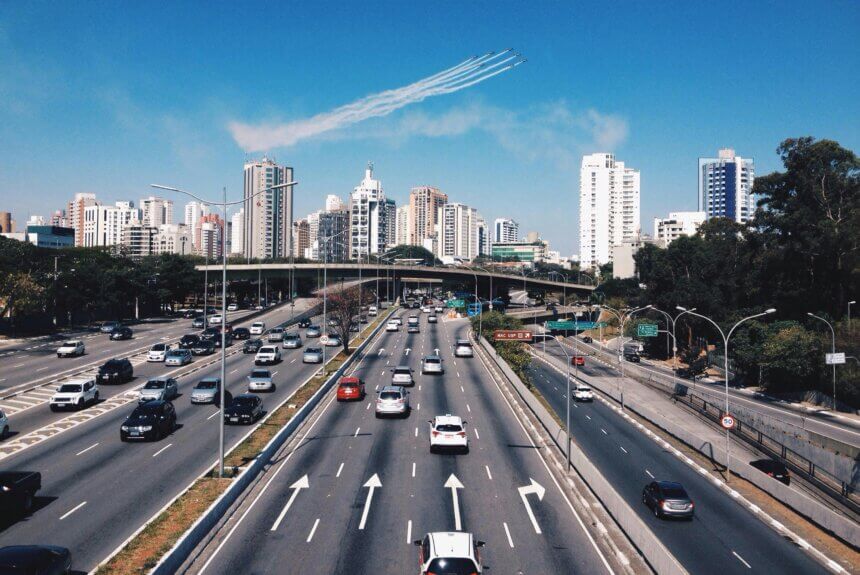
Carlos Alexandre de Oliveira By the end of 2026, Brazil will show an approximate 8% reduction in total GHG emissions compared to the average level of the post-2020 years.The Greenhouse Gas Emissions and Removals Estimation System (SEEG) from the Climate Observatory shows that Brazil’s emissions profile has historically been dominated by land-use change and deforestation,…

Canada: 2026 Emissions Forecast
Diane Szoller Earlier 2026 projections to reduce emissions by 20% below the 2005 level are now expected to reach 16%, continuing 2023 trends unless major policy changes occur.Canada issued its second Progress Report on Canada’s 2030 Emissions Reduction Plan under the Canadian Carbon Neutrality Accountability Act in December 2025. Federal government data is always reported…

China: 2026 Emissions Forecast
Vincent Mao As China enters the first year of its 15th Five-Year Plan (2026–2030), the world’s largest greenhouse gas emitter stands at a historic inflection point. Following a period of “plateaued” emissions through late 2025, the 2026 outlook suggests that China is no longer just slowing its growth—it is beginning a structural descent. While the central…

EU: 2026 Emissions Forecast
Siti Syaliza Mustapha Modest emissions reductions are forecast for 2026, fulfilling Paris Agreement obligations, while policy intensification is needed to reconcile climate ambition with energy security and economic resilience amid escalating geopolitical turbulence. The European Union is poised to continue its emissions-reduction trajectory in 2026, building on the significant progress documented in the European Environment…

France: 2026 Emissions Forecast
Camille Huret France is not on a trajectory compatible with a 50 percent reduction in greenhouse gas emissions by 2030 compared to 1990 levels.France’s greenhouse gas emissions are expected to decline slightly by the end of 2026, but not at a pace consistent with Paris Agreement objectives. National inventory data indicate that territorial emissions decreased…

Germany: 2026 Emissions Forecast
Monique de Ritter While a further decline in emissions is expected in 2026, it will be modest and fragile. Germany looks set to cut emissions again in 2026, mostly thanks to rapid growth in wind and solar. But the drop is small — 2025 only just met short-term limits — and policy rollbacks plus weak…
India: 2026 Emissions Forecast
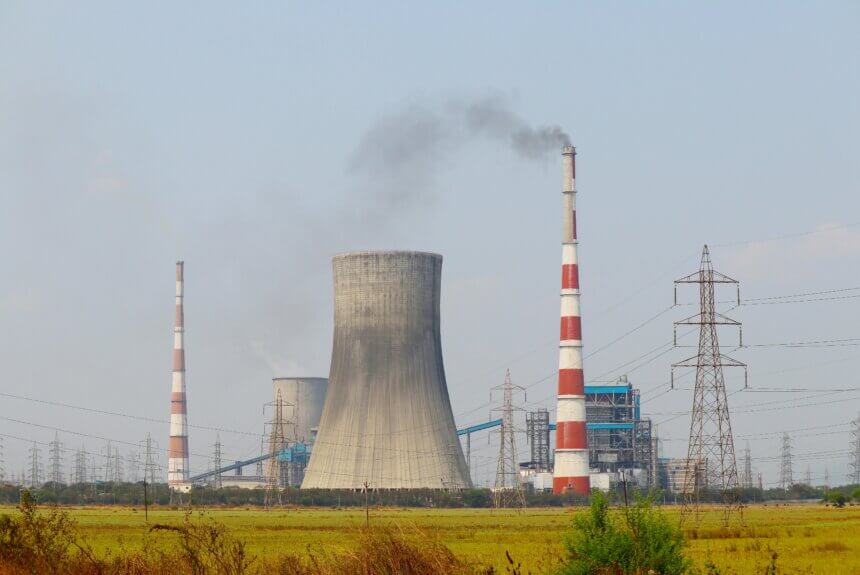
Ankita Padelkar India’s total GHG emissions are projected to rise modestly by 1-1.5% in 2026, reaching approximately 3.25-3.27 billion tonnes CO₂e from 2025 levels, driven by continued economic growth but moderated by aggressive renewable energy expansion and efficiency gains. Total Emissions Projection India’s fossil fuel CO₂ emissions grew by just 1.4% in 2025 to 3.22…

Indonesia: 2026 Emissions Forecast
Netra Naik Stabilization Without Transformation. Without an accelerated coal phase-out, faster renewable deployment, and durable land-use enforcement, emissions reductions will remain fragile and insufficient to place the country on a Paris-aligned pathway.Indonesia’s greenhouse gas emissions trajectory heading into 2026 reflects a familiar pattern. Incremental progress in land use governance is being offset by continued dependence…

Japan: 2026 Emissions Forecast
Delmaria Richards Japan’s Emissions Decline Accelerates, but Experts Warn 2026 Will Be a Critical Turning Point for Paris Alignment For the first time in more than three decades, Japan’s greenhouse gas emissions have fallen below their lowest level in more than three decades, marking a significant milestone in the country’s climate transition. Yet analysts caution…

Mexico: 2026 Emissions Forecast
Miguel Angel Martinez Jr. Mexico’s current policy direction appears strong enough to slow emissions growth, but not yet strong enough to guarantee an economy-wide drop by 2026, especially given rising energy demand, growing transport activity, and structural dependence on fossil fuels.The Paris Climate Agreement sets a global expectation that countries must reach carbon neutrality by…

Nigeria: 2026 Emissions Forecast
Michael Johnson Nigeria’s greenhouse gas emissions are projected to increase by approximately 1-3% by the end of 2026. This forecast emerges from a fundamental tension at the heart of the nation’s policy: a set of ambitious, detailed climate commitments exists in direct conflict with immediate economic plans centered on fossil fuel expansion. While the country…

Saudi Arabia: 2026 Emissions Forecast
Abeer Abdulkareem, Amgad Ellaboudy Saudi Arabia’s emissions are expected to be higher at the end of 2026, reaching around 713 million tonnes.Saudi Arabia’s emissions trajectory, driven by its continued dependence on oil production, consumption, and exports, shows no sign of bending downward in the coming decade. On the contrary, its emissions are projected to rise…

South Africa: 2026 Emissions Forecast
Rugare Zhou The total change from policy shifts estimates suggests a notable reduction in 2026 as the country moves toward its 2030 goal. South Africa’s greenhouse gas (GHG) emissions are projected to be on a downward trajectory after peaking in 2024. However, the country remains heavily reliant on coal. Two policy shifts, including the carbon tax phase…

Spain: 2026 Emissions Forecast
Juanjo Santos Based on current trends, total emissions will continue to decline modestly, but not at the pace required to meet mid- and long-term goals.As of now, there are no officially published final figures for Spain’s total greenhouse-gas emissions in 2025 from the national statistical agency (INE) or the National Inventory — the most recent…

Turkey: 2026 Emissions Forecast
İpek Gülkaya Taşgın There is little evidence of a structural break that would put total emissions on a firm downward path by 2026.Türkiye’s latest official greenhouse gas inventory shows a clear long-term pattern: emissions have more than doubled since 1990 and were still rising in the most recent reporting year. Energy remains the dominant source,…

UK: 2026 Emissions Forecast
Cesar A.A. Da Silva Forecast: By the end of 2026, UK territorial emissions are expected to be approximately 3–4% lower than in 2024. In 2024, the United Kingdom recorded a renewed decline in territorial greenhouse gas (GHG) emissions, reinforcing its long-term decarbonization narrative while also exposing the limits of progress achieved so far. Provisional government statistics show total emissions of 371…

US: 2026 Emissions Forecast
Abby Carlson Given the current administration’s agenda to focus heavily on fossil fuel production, it is evident that our national output would increase substantially compared to recent years.By the end of 2026, I expect the United States’ total emissions to increase markedly. Based on the current administration’s agenda to focus heavily on fossil fuel production,…
Climate Commitments
Tracking the short and long-term climate goals of leading greenhouse emissions countries
Read More

NDC Tracking Sources
View the sources we use to track progress of countries’ committments.
Read More