The gap isn’t in the legislation but in local government capacity, adaptation funding, and execution speed.South Africa has warmed approximately 1.3°C since 1976, at roughly twice the global average rate, and the effects are visible in the data. Since 2004, the national mean temperature has risen by an estimated 0.8°C above already-elevated baselines, with warming...
Category: South Africa News Brief and Action Alert
South Africa: Weather Patterns and Climate Change
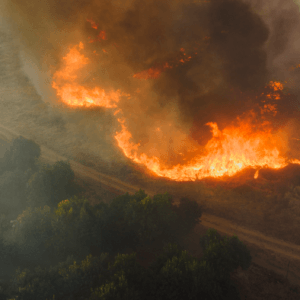
The gap isn’t in the legislation but in local government capacity, adaptation funding, and execution speed.South Africa has warmed approximately 1.3°C since 1976, at roughly twice the global average rate, and the effects are visible in the data. Since 2004, the national mean temperature has risen by an estimated 0.8°C above already-elevated baselines, with warming...
South Africa: Current Emission Levels
The greatest impediment is coal, understood not simply as a fuel but as an entire economic and political system. The largest source is clear, the tools exist, and the remaining gap is implementation at a pace the country has not yet found.South Africa’s emissions story is a stubborn plateau. Private solar is spreading, climate legislation...
South Africa: The Most Effective Climate NGOs
The Centre for Environmental RightsSouth Africa has many climate organisations, but the Centre for Environmental Rights is the strongest candidate for the country’s most effective climate NGO because it has changed what government and companies can legally get away with. Its power does not come from size or public visibility. It comes from using constitutional...
South Africa: Country Water Resources
Water security now sits at the centre of both the climate and development agenda, shaping public health, food production, energy generation, and urban livelihoods.South Africa’s water crisis is not primarily a drought problem. It is a structural one. The country receives roughly 500 mm of rainfall per year, well below the global average of 860...
South Africa: Plan to Phase Out Fossil Fuel by 2030
South Africa has developed a binding directive to the Department of Mineral Resources and Energy (DMRE) to align energy production with its Integrated Resource Plan (IRP) with 2030 1.5 0C targets South Africa is planning to phase-out fossil fuel by 2030 aligning with the Fossil Fuel Non-Proliferation Treaty Initiative. It intends to exploit the Just...
South Africa: Climate Change and Artificial Intelligence
The trade-off between AI’s high energy consumption and its potential to reduce carbon emissions is considered worthwhile if managed properly. Artificial intelligence (AI) is evolving from a consumer tool into a strategic asset for climate action, focusing on optimizing energy grids, monitoring environmental data, and aiding agricultural resilience. AI is accelerating South Africa’s transition toward sustainability...
South Africa: 2026 Emissions Forecast
The total change from policy shifts estimates suggests a notable reduction in 2026 as the country moves toward its 2030 goal. South Africa’s greenhouse gas (GHG) emissions are projected to be on a downward trajectory after peaking in 2024. However, the country remains heavily reliant on coal. Two policy shifts, including the carbon tax phase two and...
South Africa: Climate Mitigation & Economic Development
South Africa faces a major conflict between climate action and economic development. The government is prioritizing inclusive growth through infrastructure, skills, and industrialization; however, climate policies like carbon pricing and just transition funds aim to bridge this by leveraging green investment (renewable energy, hydrogen) to create jobs. High-emitting sectors, such as coal-dependent industries, resist change, thereby slowing progress...
South Africa: Sea Level Rise
Sea level rise (SLR) is a critical aspect of global climate change, particularly affecting coastal regions, including low-lying areas of southern Africa. Sea level rise in South Africa, a direct consequence of climate change, is an accelerating trend that poses significant threats to coastal property, infrastructure, and communities. The primary effects are increased coastal erosion and...