Canadian energy grids are not currently fully capable of handling projected future demand without massive modernization, expansion, and multi-trillion-dollar budgets.
The Canadian Center for Energy Information clarifies that Canada’s energy grid isn’t a single system; it consists of 13 provincial and territorial systems, with power lines running largely north-to-south rather than east-to-west because of population geography, historical trading patterns with the USA, and provincial governance models.
Under the Canadian Constitution, each province and territory has jurisdiction over natural resources and electricity and manages its own generation, transmission, and distribution. The federal government has authority over some aspects of nuclear, electricity exports, and designated transmission lines. Recently, provinces and territories have been signing memorandums of understanding to build more interprovincial and coast-to-coast east-west transmission infrastructure, toward a fully unified national grid.
The Canadian Climate Institute (CCI) points out the need to accelerate investments in transmission infrastructure to strengthen inter-provincial trade, domestic commercial options, and energy independence, as connections between grids don’t work smoothly when each province independently governs and plans its own electrical system. The result is mismatched financial incentives and regulatory barriers. However, Canadian energy grids don’t break down often, and major urban centers have steady, reliable power.
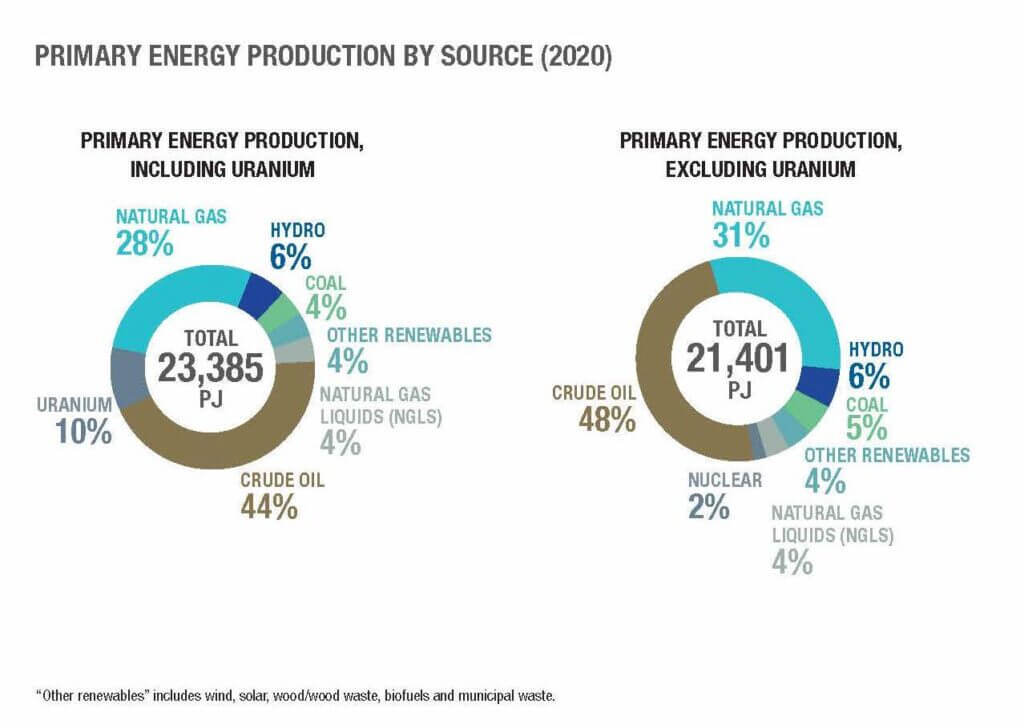
Canada’s Energy Regulator confirms Canadian energy grids handle a mix of energy sources. BC, Manitoba, Quebec, and Newfoundland/Labrador typically generate over 85% of their electricity from hydro; Yukon produces over 70% of its electricity from hydro. PEI generates 99% of its electricity from wind. Ontario, New Brunswick, and NWT rely on a mix that can include nuclear, hydro, wind, biomass, coal, natural gas, and petroleum. Alberta, Saskatchewan, Nova Scotia, and Nunavut generate most of their electricity from fossil fuels such as natural gas, coal, or petroleum.
Canada’s Center for Cyber Security reports that energy grids are generally reliable and well regulated but face growing security risks from structural fragmentation, aging infrastructure, and rising cyber threats. Cyberattacks are possible given the connections between the USA and Canadian grids and rising threat activity against USA grids. Advanced technology in Canada, with enhanced networking capabilities, can reduce operational costs, lower emissions, and meet rising electricity demand. These ‘smart grids’ are intended to adapt intelligently and in real-time to fluctuations in electricity consumption. However, this increased internet connectivity can also allow cyber threats to spread through connected control systems. Major utilities are using modern security frameworks, monitoring, and public-private partnerships to block common cyber threats and hacktivist tampering. However, hackers have tampered with online systems that control water, energy, and farm facilities to gain media attention, discredit organizations, and undermine Canada’s reputation. Alternative solutions, such as Virtual Private Networks with two-factor authentication , should be implemented to avoid direct exposure to the internet.
CCI signals Canadian energy grids are not currently fully capable of handling projected future demand without massive modernization, expansion, and multi-trillion-dollar budgets.
Widespread adoption of electric vehicles, electric heat pumps, population growth, and power-hungry data centers or AI infrastructure are straining existing capacity.
In 2026, Canada introduced an updated National Electricity Strategy to double the grid’s capacity by 2050 to meet rising demand, expand interconnections, and keep power affordable.
Natural Resources Canada (NRCan) maintains that Canada’s electricity grid is currently 83% emission-free and targets 90% by 2030. Grids can be supported by replacing fossil fuels with more battery storage to manage demand peaks and by transitioning rural and remote communities from diesel to wind/solar. The territories implementing demand management can reduce overall and peak-time energy consumption by connecting to the NA grid. Canada’s phase-out of coal-fired electricity by 2030, more natural gas regulations, and bringing power from Newfoundland and Quebec to N.B. and N.S. will also support more reliable, resilient provincial grids. Efficiencies help not only with geopolitical shocks, but also with responses to system-stressing events such as droughts, cold snaps, heat waves, and outages.
NRCan highlights a rapidly changing world: geopolitical conflict, shifting trade relationships, rapid technological change, and the resulting volatility straining global energy systems and intensifying competition for resources, investment, and supply chains. Access to abundant, affordable, and reliable energy is more than ever fundamental to competitiveness, energy security, and economic sovereignty.
This Post was written by Climate Scorecard Canada Country Manager, Diane Szoller.
Learn More Resources
1. Canada Centre for Cyber Security – Cyber threats to Canada’s electricity sector
○ Link: https://www.cyber.gc.ca/en/guidance/cyber-threat-bulletin-cyber-threat-canadas-electricity-sector
2. Canada Energy Regulator – Provincial and Territorial Energy Profiles
○ Link: https://www.cer-rec.gc.ca/en/data-analysis/energy-markets/province-territory-energy-profiles/
3. Canadian Centre for Energy Information – Energy Fact Book, spring 2026 edition
○ Link: https://energy-information.canada.ca/sites/default/files/2026-05/energy-fact-book-spring-2026.pdf
4. Canadian Climate Institute – Connecting energy grids
○ Link: https://climateinstitute.ca/connecting-regional-electricity-grids-canada-top-nation-building-project/