Over the last decade, Canada’s Green Party has supported important legislation for Canada’s action on climate change. For example, in 2015, amendments to Bill C-46, the Pipelines Safety Act, were accepted, including ‘aboriginal governing bodies reimbursement for actions in relation to a spill’ and the concept of polluter pays. The Green Party was part of...
Author: Diane Szoller (Diane Szoller)
Canada Will Come Close to Reducing Its Emissions by 50% by 2030
The IPCC has underscored the urgency of countries reducing their greenhouse gas emissions (GGEs) by 50% over pre-industrial temperatures by 2030. Visit https://www.un.org/en/climatechange/reports. Canada will come close to reducing its emissions by 50% by 2030 because of the following reasons:First, Canada’s 2030 Emissions Reduction Plan (ERP) (March 2022) details a GGE reduction target strategy of...
The IISD Reported that Canada gave out $8.6 billion in Subsidies in 2021
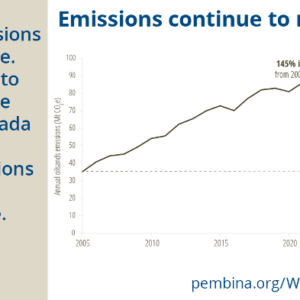
Federal greenhouse gas emissions (GGEs) data by economic sector in Canada has been relatively unchanged between 2005 and 2019 as emissions from oil and gas extraction, gas-powered trucks, and heavy-duty diesel vehicles continued to climb and be offset by decreases in other sectors. For example, a 66 Mt or 8.9% reduction in 2020 from 2019...
Indigenous Populations Lead Climate Justice Movements in Canada
The Indigenous population in Canada (5%) is one of the largest among countries that share a similar colonial history. Statistics Canada (September 2022) reports 1,807,250 Indigenous peoples involving three very diverse groups/populations – First Nations (1,048,405), Métis (624,220) and Inuit (70,545). The remaining include multiple Indigenous identities reflected in over 70 Indigenous languages. Of the...
Canada’s Agriculture Sector Contributed .69% of Global Agricultural Emissions in 2021
Canada’s agriculture sector’s net greenhouse gas emissions (GGEs) have remained relatively stable since 1990 while its CO2 equivalent gases have varied. Primary emissions (excluding fossil fuels emissions – another sector) are attributed to crop production, such as cereals and oilseeds, and livestock production, (beef, dairy, poultry and swine). Climate Trace, a global non-profit coalition tracking...
Canada: A Climate Look Past and Forward
Looking Back 2022: the 2030 Emissions Reduction Plan/ Looking Forward 2023: Implementation of the National Adaptation StrategyOn March 29, 2022, Canada’s first 2030 Emissions Reduction Plan under the Canadian Net-Zero Emissions Accountability Act was released by Hon. Steven Guilbeault, Minister of Environment and Climate Change (MECC), this is a critical federal climate mitigation policy that...
A Decentralized Provincial-Based Power System in Canada
Western, Eastern, and Quebec grids make up Canada’s power grid. Power lines run in a north-south configuration to allow electrical sales to the USA. Each province and territory generates its electricity as follows (2019 data):Alberta – Nearly 90% of electricity is fossil fuels – 36% coal, 54% natural gas. The remaining 10% is renewable, wind (6%),...
Canada’s Climate Progress Indicators
Our goal recently has been to visit indicators influencing climate change and their reporting processes over a 9-month period and a 3-year period for trends and any progress.Statistics Canada is responsible to Parliament through the Ministry of Innovation, Science and Industry. This open data, released under the Statistics Canada Open License is derived through compulsory...
Mandatory Target for All New Light-Duty Cars and Passenger Truck Sales to be Zero-Emissions by 2035 in Canada
As of 2020, Stats Canada reports the number of passenger motor vehicles registered in Canada (vehicles under 4,500 kg) was 23,472,111. Light vehicles in Canada, including passenger cars, light trucks, SUVs, and vans (weighing less than 4,500 kg), account for the largest growth in registrations. 1,358,657 vehicles were produced in Canada in 2020. Additionally, the...
Canada’s Economy Could Shrink by 6.9% Annually by 2050 Without More Ambitious Climate Action
Climate change loss and damages expected in Canada between now and 2050 are measurable. Most recently, a Queen’s University/Institute for Sustainable Finance report (April 2022) stated capital output lost due to physical damages under different warming scenarios by the end of the century (with 2030, 2050, and 2070 as inflection points) will grow dramatically. This...