

As AI adoption accelerates, Japan faces a critical challenge: ensuring that digital growth is powered by low-carbon electricity.
Japan is accelerating its adoption of artificial intelligence (AI), integrating advanced computing into manufacturing, healthcare, public administration, and climate planning. However, as AI becomes central to the country’s economic and technological strategy, experts warn that its rapidly growing electricity demand could complicate Japan’s newly strengthened climate commitments for 2035 and 2040.
AI’s Expanding Role in Japan’s Innovation Strategy
Over the past decade, Japan has embedded AI into national innovation policy, including the 2019 AI Strategy, which promotes applications in robotics, smart cities, and environmental monitoring. Major corporations and universities are investing heavily in AI‑driven automation to address labor shortages and boost productivity. Internationally, Japan has also taken a leadership role in AI governance. Under its 2023 G7 presidency, the Hiroshima AI Process was launched to promote ‘trustworthy AI,’ emphasizing safety, transparency, and alignment with democratic values.
As for monitoring and energy system optimization, AI is already proving valuable in climate and energy planning. For example, machine-learning tools are being used to analyze satellite data, sensor networks, and meteorological observations, enabling faster detection of climate trends and pollution hotspots. Research shows that AI can improve extreme-weather forecasting, optimize energy demand, and support the integration of renewable energy sources.
A recent study found that AI, when combined with low‑carbon energy sources, is associated with improvements in environmental sustainability indicators in Japan between 1985 and 2022, suggesting that digitalization can support decarbonization when paired with cleaner power systems. These applications include and are not limited to:
- Enhancing grid forecasting to reduce electricity waste.
- Detecting land‑use changes and air pollution patterns.
- Simulating policy and infrastructure scenarios before real‑world deployment.
Yet these advancements come with significant energy costs.
The Energy Challenge Behind AI’s Growth
Despite these benefits, AI’s energy footprint is growing rapidly. Data centers and semiconductor facilities require substantial electricity for computing and cooling. Global analyses warn that AI‑related electricity demand could more than double by 2030, with data centers consuming nearly 1,000 TWh annually, almost equal to Japan’s current electricity use.
The International Energy Agency (IEA) projects that global electricity generation for data centers will rise from 460 TWh in 2024 to over 1,300 TWh by 2035, with coal still supplying around 30% of this power unless countries accelerate renewable deployment.
Japanese think tanks echo these concerns. Analysts note that AI‑driven computing loads will be a major driver of additional electricity demand, potentially slowing emissions reductions if the power mix remains fossil‑heavy. The diagram below illustrates how AI, energy use, and emissions interact.
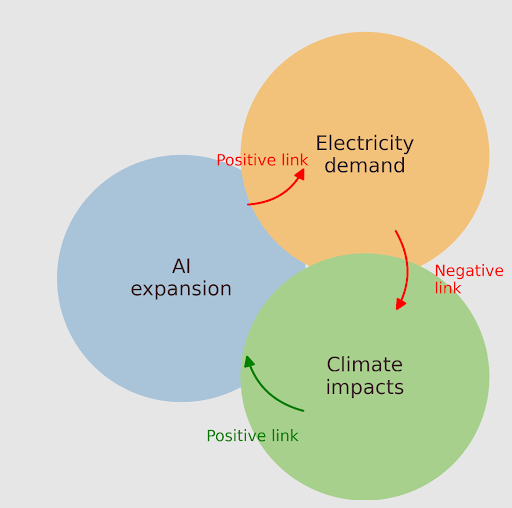 Figure 1. AI–Energy–Climate Linkages in Japan
A conceptual diagram shows AI deployment increases electricity demand; if powered by fossil fuels, emissions rise. Conversely, AI can enhance renewable integration, grid efficiency, and climate risk management, reducing emissions when supported by a decarbonized power system.
Japan’s Updated Climate Commitments and Energy Strategy
In February 2025, Japan adopted an updated climate plan that raises its ambition for 2035 and 2040. The country now aims to cut greenhouse gas emissions (Figure 2) to strengthen its pathway toward net‑zero by 2050. To support these goals, the revised Strategic Energy Plan outlines:
- 40–50% renewable electricity by 2040, up from roughly 23% today.
- Around 20% nuclear power by 2040, reversing earlier expectations of a phase‑out.
- Coal’s share of the power mix reduced to 30–40%, down from nearly 70% historically.
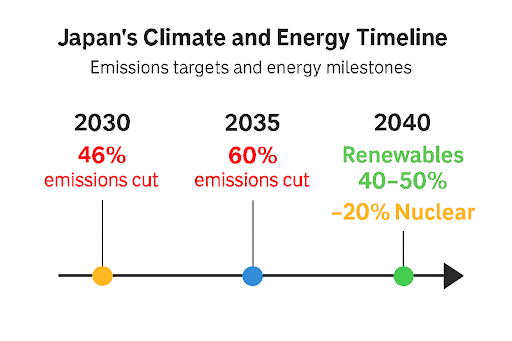 Figure 2. Japan’s Climate and Energy Timeline
Environmental groups contend that the 60% reduction target falls short of a 1.5°C‑aligned pathway, which would require at least a 66% cut by 2035. They warn that weaker targets increase cumulative emissions and climate risks.
As AI adoption accelerates, Japan faces a critical challenge: ensuring that digital growth is powered by low-carbon electricity. If renewable and nuclear deployment accelerates as planned, AI could deliver a net climate benefit by improving energy efficiency, forecasting, and system optimization. Nevertheless, if new data centers rely heavily on coal and gas, AI risks becoming a major obstacle to Japan’s climate ambitions.
Ultimately, whether AI becomes a climate ally or liability will depend on how quickly Japan transforms its energy mix and whether digital growth is tied to a genuinely low‑carbon power sector.
This Post was submitted by Climate Scorecard Japan Country Manager, Delmaria Richards.
Learn More Resources
- Japan adopts new carbon reduction targets as it plans to boost nuclear and renewable energy by 2040 (2025). AP News. https://apnews.com/article/japan-climate-energy-decarbonization-targets-nuclear-carbon-7006f2dd241e30a3129a00da5bf707dd
- Japan’s new 2035 climate target is not consistent with the 1.5°C goal of the Paris Agreement (2025). WWF Japan. https://www.wwf.or.jp/eng/activities/5896.html
- RIETI. (2025). Data, power and emissions: How AI’s growth may slow down the green transition. Retrieved from https://www.rieti.go.jp/en/special/p_a_w/228.html