

Rising sea levels present a profound and escalating challenge to Nigeria’s coastal regions.
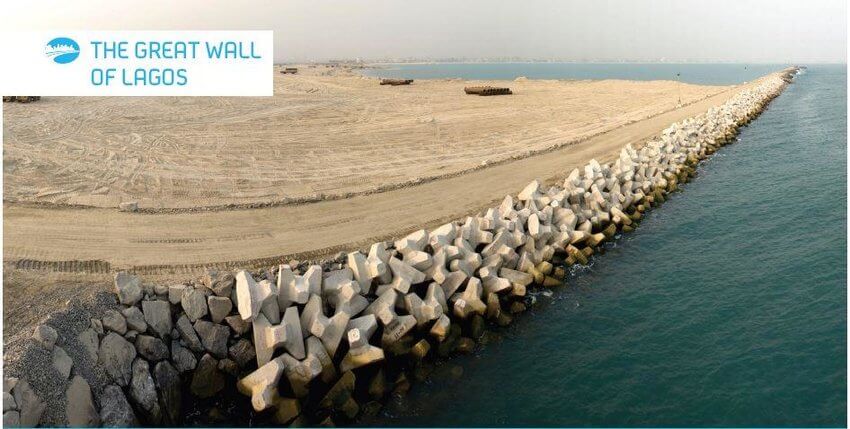
The Great Wall of Lagos (Source: www.ekoatlantic.com)
Rising sea levels present a profound and escalating challenge to Nigeria’s coastal regions. The effects are already being felt in shoreline erosion, the intrusion of saltwater into freshwater systems, and the increased frequency of coastal flooding. From 1975 to 2025, a clear and accelerating trend has been observed. The period from 1975 to the early 2000s saw a relatively modest but steady rise. From the 2000s onward, the rate of increase accelerated significantly, with satellite data confirming a rise of several millimeters per year, culminating in an estimated total increase of over ten centimeters by 2025 compared to 1975 levels. Looking ahead from 2025 to 2050 and beyond, scientific projections indicate a much steeper curve. A rise of another twenty to thirty centimeters is considered likely by 2050, with the potential for a meter or more by the end of the century, depending on global emissions trajectories. This acceleration is driven by the thermal expansion of ocean water and the increasing melt from ice sheets.
The immediate impacts on property and community planning are substantial. Existing property, particularly in low-lying areas like parts of Lagos, Port Harcourt, and the Niger Delta, faces direct inundation and damage from storm surges. Planned property developments are increasingly being reassessed, with some high-profile coastal projects facing scrutiny and redesign amid newly identified flood risks. This physical risk is directly translating into economic pressure, most notably in the home insurance sector. Insurance rates in vulnerable coastal communities are rising sharply, and in some of the most exposed areas, coverage is becoming difficult to obtain altogether, potentially devaluing property and threatening mortgages. City and community planning are being forced to adapt. Master plans now place greater emphasis on elevated structures, improved drainage systems, and buffer zones. Coastal geography itself is changing, with beaches narrowing, mangroves being degraded by saltwater, and some barrier islands experiencing significant land loss.
Efforts to adapt to and mitigate sea-level rise are underway, though they vary in scale and effectiveness. Hard engineering solutions, such as seawalls and groynes, are evident in places like Victoria Island in Lagos. Softer approaches include mangrove reforestation projects, which act as natural barriers and stabilize sediments. A significant ongoing project is the Great Wall of Lagos, a massive sea defense system that is partially built and under continuous construction. This initiative represents a major commitment to protecting the city’s economic heart from storm surges and erosion. The timeline for these efforts is long-term, with adaptation measures requiring continuous implementation and major engineering projects like the sea wall taking a decade or more to complete. The financial cost is immense, with estimates for comprehensive national adaptation running into tens of billions of dollars over the coming decades, funds that are challenging to secure.
Given the irreversible nature of sea level rise and the enormous costs of protection, limits on future sea level property development are not just advisable but necessary. Allowing unchecked development in high-risk zones is a recipe for future economic loss and human catastrophe. A strategic retreat from the most vulnerable areas, coupled with strict regulations that prohibit new construction in identified floodplains and mandate elevated, resilient designs in moderate-risk zones, is an essential component of a sustainable national climate strategy. This proactive approach is crucial for safeguarding lives, protecting economic assets, and ensuring the long-term viability of Nigeria’s coastal communities.
This Post was submitted by Climate Scorecard Nigeria Country Manager, Michael Johnson.